
Compare
Iron Gate vs LVT: A Direct Comparison for Mobile Security Buyers
Iron Gate and LVT (LiveView Technologies) both build solar-powered, cellular, rapid-deploy mobile surveillance units. The core difference is the ownership model. Iron Gate lets you own the hardware and choose where your footage lives, including fully on-premise, and builds every unit in-house in Holly Hill, Florida. LVT operates a larger, subscription-based, cloud platform at national retail scale.
Quick Comparison
If you already know LVT and you are checking whether a better-fit option exists, here is the honest side-by-side.
| Factor | Iron Gate | LVT (LiveView Technologies) |
|---|---|---|
| Core hardware | Solar, cellular, rapid-deploy SecMods units | Solar, cellular D3 mobile units (22-foot pole) |
| Ownership model | Own the hardware, no mandatory platform subscription | Subscription and platform fees, ongoing (documented, 2M Technology alternatives guide 2026) |
| Data location | On-premise option, customer-controlled | Cloud-only, stored in LVT's cloud (confirmed, LVT brand pages) |
| Manufacturing | In-house, Holly Hill FL (American-made) | US-based operator, larger scale |
| Customization | True engineering customization | Fixed platform configuration (documented, 2M Technology 2026) |
| AI detection | Gun detection under 3 seconds, edge AI | Agentic talk-down, edge processing, license plate recognition (confirmed, lvt.com) |
| Service model | Direct, personal, engineer access | Enterprise support organization |
| Target market | SMB to mid-market | Enterprise, retail, government |
| Pricing posture | Competitive, built for the mid-market | Approx. $38,000-52,000 purchase or $1,200-3,400/mo rental (third-party estimate, Jan 2026, verify before use) |
| Federal path | Positioned for GSA Schedule inclusion (not yet held) | GSA Schedule holder (confirmed, LVT GSA price list) |
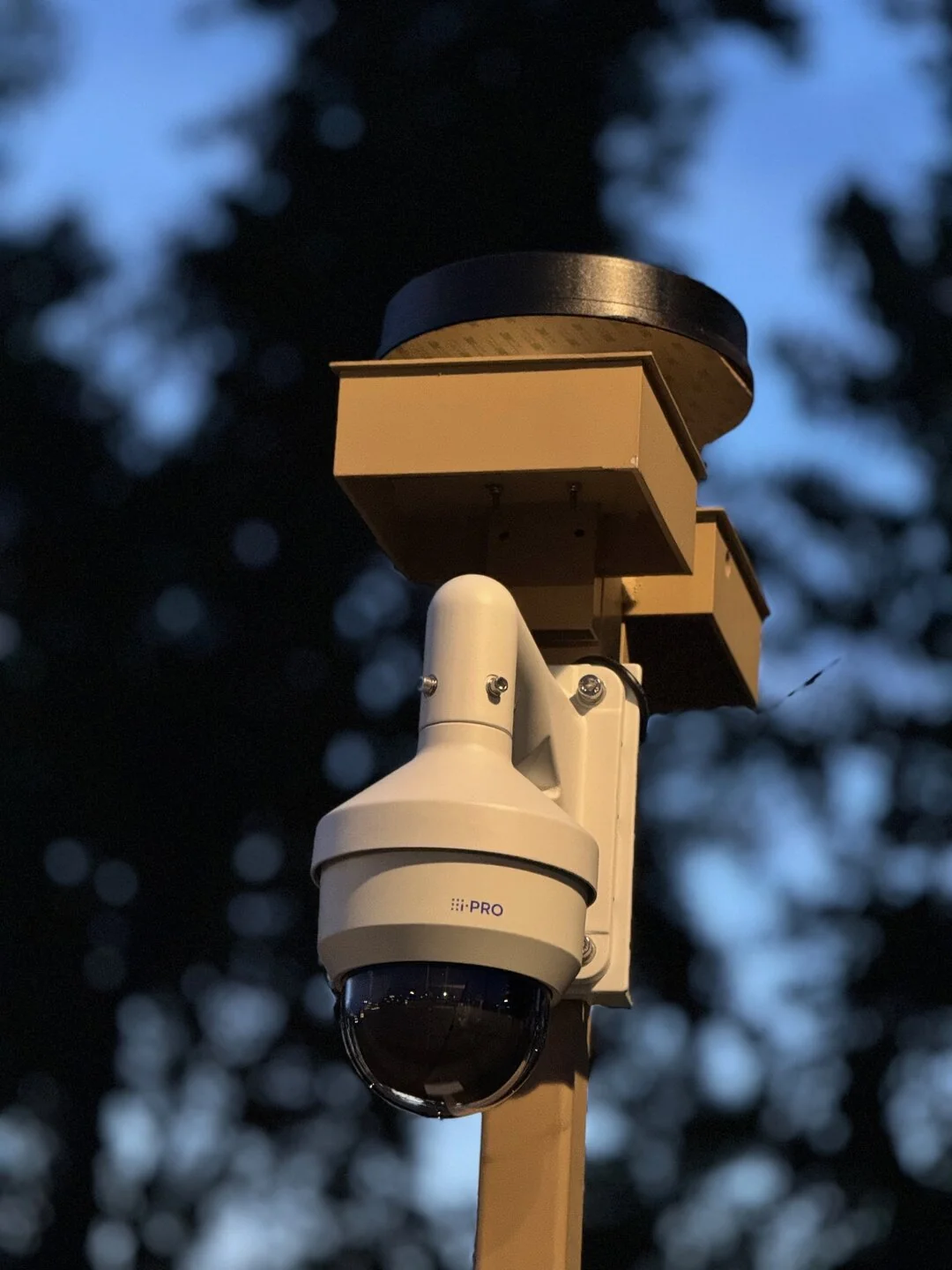
| Camera certifications | Cameras on the i-PRO platform (3090, 2030) carry FIPS 140-2 Level 3, IK10, IP66, and NDAA 889 posture | Encrypted in transit and at rest; NDAA 889 status not independently confirmed |
Every LVT figure above is a third-party estimate, not an official rate card. LVT is privately held with quote-based pricing. Treat all pricing as directional and verify before relying on it.
Tell us your site and requirements and we will show you exactly what ownership looks like for your deployment.
Where LVT Is the Better Choice
LVT is a strong, proven operator, and for some buyers it is the right call. Here is where.
If you need a single vendor managing thousands of units across a national retail footprint, LVT is built for exactly that. They have deployed more than 15,000 units and carry established relationships with large retail and enterprise operators. Their support organization is mature, their agentic AI talk-down and Axon integration are genuinely advanced, and they hold a GSA Federal Supply Schedule today, which gives federal buyers a direct, existing acquisition path that Iron Gate cannot yet match.
LVT is also investing, not standing still. Through 2025 and into 2026 the company brought in new senior leadership and expanded its research and development. If your priority is a large-scale, fully managed, cloud-based program from an enterprise vendor with a national track record, LVT is a credible and capable choice, and you should evaluate them seriously.
That honest read is the point. The rest of this page is about the buyers LVT's model does not fit as well.
Where Iron Gate Is the Better Choice
For a mid-market buyer who wants to own their system and control their data, Iron Gate answers the specific gaps in a subscription-cloud model.
- Ownership instead of subscription. You buy the hardware and you own it. There is no perpetual platform bill, and the equipment does not stop working if you stop paying a monthly fee. Over several years, that is the difference between an asset you hold and a cost that never ends.
- On-premise data option instead of cloud-only. Your footage can stay entirely on infrastructure you control, on site. For government, healthcare, and other regulated buyers, this supports data-sovereignty requirements and reduces third-party breach exposure. A cloud-only platform cannot offer this, because the cloud is the product.
- True engineering customization instead of a fixed platform. Iron Gate designs and builds in-house, so a non-standard site, an unusual mounting need, or a custom configuration is an engineering task, not an unsupported request.
- American in-house manufacturing. Every unit is designed, engineered, and assembled in Holly Hill, Florida. That means direct supply-chain control, faster support from the people who built the unit, and a clean domestic-origin story for buyers who care about where their hardware comes from.
- Direct, personal service instead of an enterprise call center. You talk to an engineer who knows your deployment, not a ticket queue.
- Built for the mid-market. Iron Gate is priced and sized for the buyers that enterprise subscription pricing prices out.
Ownership vs Subscription Over Time
The biggest long-run difference between these two is not a feature. It is how you pay, and for how long.
A subscription model spreads cost across ongoing monthly platform fees. The entry number can look manageable, but the fees recur for as long as you run the system, and the footage lives in the vendor's cloud the whole time. An ownership model front-loads more of the cost into the hardware you buy, then flattens: once you own the unit, you are not paying a platform fee to keep watching your own site, and your data can stay on your own infrastructure.
Which shape wins depends on your time horizon. For a short pilot, subscription can be simpler. For a multi-year deployment, ownership usually costs less over the full period and leaves you holding an asset instead of a renewal. Run the math on your own numbers before deciding, and treat any published competitor pricing as a directional estimate, not a quote.
One publicly reported data point is worth reading carefully rather than at face value. In October 2025, Colorado's transportation department ended an LVT highway-camera contract. CDOT initially pointed to performance concerns, later clarified that the contract ended over cost and contract limitations as the state moved to its own system, and LVT has disputed the performance characterization, attributing issues to remote-canyon cellular gaps and weather on aging equipment. It is one contract and one set of conditions, not a verdict on the platform, and it is included here only because a comparison-shopper will find it and deserves the full, both-sided version.
See the Difference for Your Site
Both companies build capable mobile surveillance. The right answer depends on whether you want a large-scale managed subscription or a system you own and control. If ownership, on-premise data, and direct engineering support match what you need, the fastest way to see the fit is a short assessment of your actual site.
Book a Security AssessmentStill comparing? See the SecMods platform, the technology behind our systems, or the Security Camera Buyer's Guide.
Frequently Asked Questions
Does Iron Gate require a subscription like LVT?
No. Iron Gate uses an ownership model. You buy the hardware and own it, with no mandatory monthly platform subscription required to keep the system running. LVT's model is subscription-based with ongoing platform fees.
Can I keep my security footage on my own servers?
Yes. Iron Gate offers a true on-premise data option, where footage stays on infrastructure you own and control and never leaves your site. This is a core difference from cloud-only platforms, which store your footage in the vendor's cloud by design.
Is Iron Gate cheaper than LVT?
Iron Gate is built for the SMB and mid-market buyers that enterprise subscription pricing often prices out, and the ownership model usually costs less over a multi-year deployment because there is no perpetual platform fee. Exact cost depends on your configuration. Published LVT pricing is a third-party estimate, so verify any figure before relying on it.
Does Iron Gate work off-grid like an LVT trailer?
Yes. Iron Gate SecMods units run on solar power with battery backup and connect over cellular, with no external power or WiFi required, and deploy in under 30 minutes. This is the same self-contained, rapid-deploy category as LVT's mobile units.
Is Iron Gate available to government buyers?
Iron Gate is positioned for GSA Schedule inclusion and supports on-premise data architecture aligned with federal requirements. Note that LVT currently holds a GSA Schedule and Iron Gate does not yet, so federal buyers who require an existing GSA vehicle should factor that in.